How Modern SIP Trunking Powers Scalable Voice Infrastructure and Automated Agents
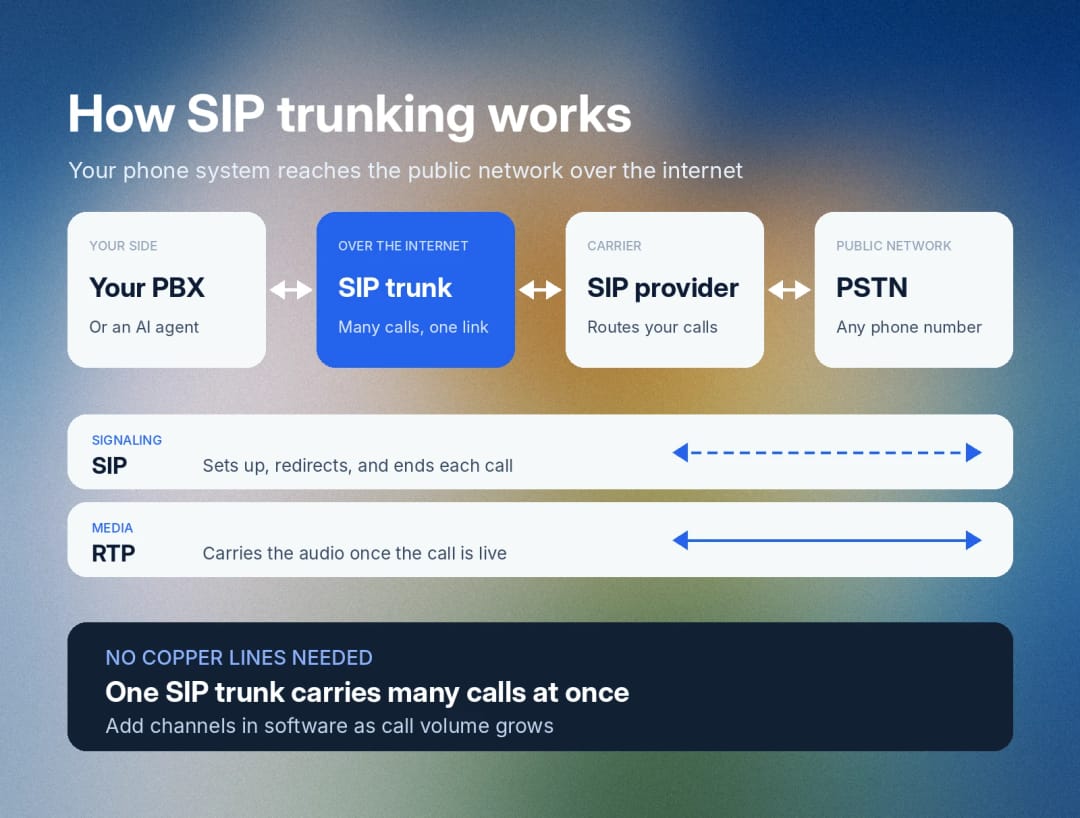
Modern telecommunications infrastructure continues to transition away from physical telephone lines toward internet-based protocol architectures. Session Initiation Protocol (SIP) trunking delivers enterprise voice connectivity across IP networks, allowing organizations to retire legacy copper wiring. Compared to conventional telephone connections, this virtualized routing mechanism provides enhanced scalability and improved cost-efficiency, with overall system expenses determined primarily by active channel counts and total minutes used.
Technical Integration and Core Infrastructure
When modernizing telecommunications stacks, enterprises frequently replace legacy technologies like PRI and ISDN lines with standardized SIP infrastructure. These internet-based connections integrate directly with hosted PBX systems and unified communications as a service (UCaaS) environments, maintaining operational continuity across cloud and hybrid environments. Furthermore, companies can preserve their established identity and contact reach through number porting, which transfers existing telephone numbers into the new network setup.
Selecting a reliable provider involves auditing specific operational capabilities. Key evaluation criteria include overall call capacity, number porting reliability, access control safeguards, failover mechanisms to preserve uptime, and comprehensive call encryption. Advanced SIP trunk implementations support call encryption and access restriction features to protect voice communications.
Expanding Autonomous Voice with ElevenAgents
Beyond basic human telephony, standardized telecommunications protocols now serve as the backbone for automated voice interactions. The ElevenAgents platform connects directly to standards-compliant SIP trunks, empowering synthetic voice agents to oversee inbound and outbound voice traffic across more than 90 languages.
To safeguard these digital agent interactions, ElevenAgents incorporates Transport Layer Security (TLS) encryption to protect call signaling alongside Secure Real-Time Transport Protocol (SRTP) for media stream encryption. These layered measures ensure voice data remains shielded throughout transmission across public and private networks.
Plan Structures and Capacity
Operational telecommunication expenditures are primarily driven by monthly minute consumption and concurrent channel capacity. Flexible access models enable businesses to scale their infrastructure according to usage needs.
Access to ElevenAgents follows this tiered design. Deployments begin with an entry-level Free tier providing 15 minutes of talk time and support for 4 concurrent calls. For growing operational volumes, paid plans start at $6 per month, which delivers 75 minutes of usage and up to 6 concurrent calls.