AI's Dominance Threatens Future Breakthroughs by Stifling Scientific Diversity, Study Warns
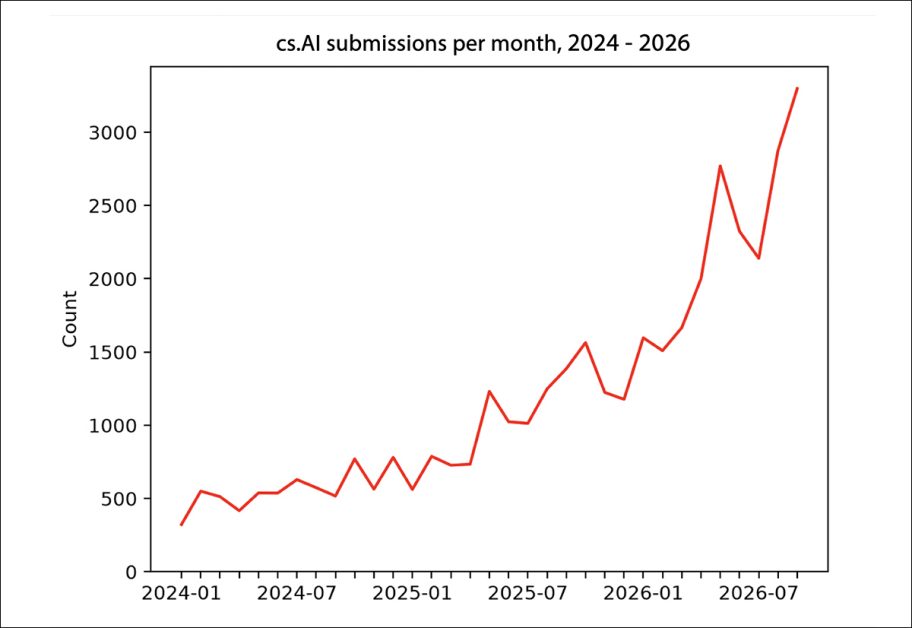
The overwhelming global attention and resources poured into artificial intelligence research may be creating a dangerous feedback loop, potentially hastening its own obsolescence and stifling future breakthroughs. A new paper, titled "Stronger artificial intelligence breakthroughs hasten their own exhaustion," posits that the intense concentration of researchers and ideas on AI is eroding the very scientific ecosystem from which new innovations, including those for AI itself, emerge.
The 'Routine' AI Storm
The past few years have seen an explosion in AI development, with new models released at a dizzying pace. While this has led to significant advancements, the paper argues that the improvements are often incremental rather than revolutionary. The primary impact of AI's rapid progress is now felt in its disruption of economies and industries, rather than solely in its technical capabilities. Furthermore, the sheer volume of AI research has led to a situation where many new ideas are merely recombinations of existing work, often hampered by brittle methodologies or prohibitive computational costs.
Topical Ghost Towns and the Great AI Migration
The migration of thousands of journalists and researchers into AI coverage has left other scientific fields with less direct attention. While AI's ubiquity means these other fields are increasingly impacted by AI, the paper highlights a concerning trend: the "AI obsession" may be leading to inadequate coverage of topics that could, in turn, influence AI's future development. This phenomenon is exacerbated by a "great AI migration" where researchers are leaving established fields to pursue AI, even at the cost of a "pivot penalty."
Converging Signatures of Concentration
The study analyzes 7.18 million computer science papers and the career paths of 3.7 million researchers, identifying three key trends since 2017, the year the Transformer architecture was introduced:
- Narrowing Research Attention: The diversity of research topics has significantly decreased. The Gini coefficient for research attention rose from 0.26 to 0.33 between 2017 and 2025, indicating a greater focus on fewer subjects.
- Researcher Migration: Over half of all researchers switching fields within computer science moved into AI. This trend is most pronounced among mid-career, established researchers.
- Strain on Peer Review: The rapid expansion of AI has made it difficult to find qualified reviewers, leading to a decline in reviewer confidence and an increase in the difficulty of matching papers with expert assessment.
Cycles of Innovation and Exhaustion
The paper draws parallels between AI research and biological sciences, noting that major breakthroughs, such as AlexNet and Transformers in AI, or cryo-EM and AlphaFold in biology, often trigger a surge of innovation followed by a period of "torpid repetition." This cycle of "creative exhaustion" suggests that AI's success is concentrating researchers and ideas around dominant approaches, while starving the surrounding fields that could foster its next leap. The number of ideas in active use has fallen below expectations following these breakthroughs, with a more significant shortfall after the Transformer than after AlexNet.
The Risk of 'Incestuous' Development
The authors warn of an "incestuous trend" within AI research, where a dominant paradigm not only suppresses rivals but also eliminates the diversity from which its own successor would emerge. This concentration of effort on a narrow range of challenges threatens to impoverish adjacent fields that would naturally feed ideas into the AI sector. The paper concludes by echoing the Nobel committee's warning about the need to uphold "creative destruction" to avoid stagnation, identifying intellectual diversity as a critical mechanism that current institutions are eroding by favoring concentration over exploration.